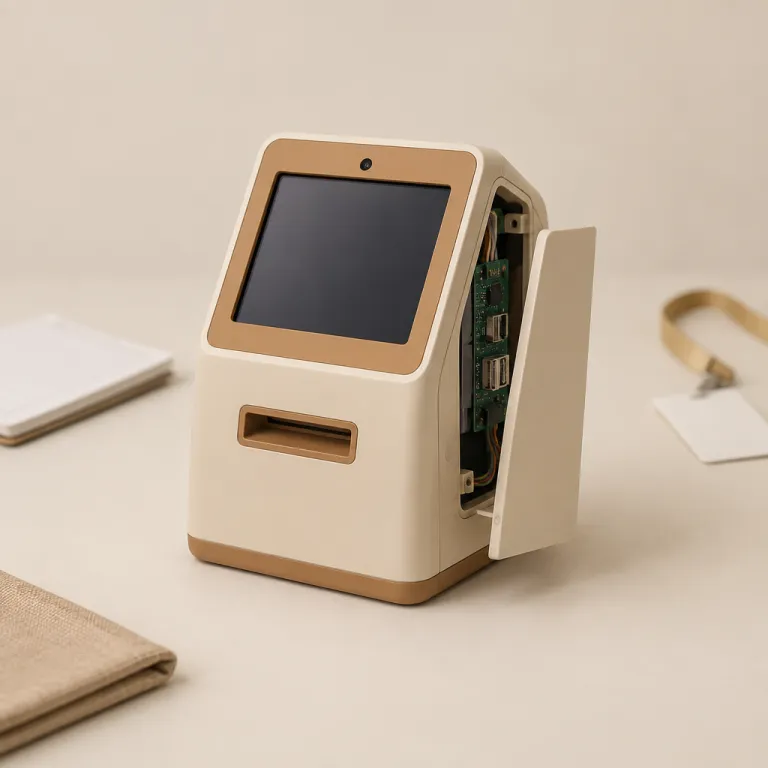
Why every serious Indian office now needs a visitor management backbone
A paper register at the front desk worked when you had ten visitors a day. Once your workplace crosses one hundred seats in India, that visitor management habit quietly becomes a security and compliance risk. A modern visitor management system for an India office turns every visitor check into structured data, not just a scribble in a dusty ledger.
Think about the last fire drill or real evacuation in your building. You probably had no real time list of visitors, contractors, or interview candidates still inside, because the manual registration process breaks the moment check ins spike. A digital visitor management system in an India office gives you live visitor data, mapped to access control logs, so your security team is not guessing in a crisis.
There is also the DPDP Act reality that every office manager now lives with. A visitor is no longer just a name and mobile number ; their photo, ID proof, and purpose of visit are personal data that your management system must protect. If your visitor management still runs on Excel and WhatsApp, you are carrying legal exposure without any of the benefits of proper management software.
Under 100 seats: when a simple digital visitor flow is enough
For a sub 100 seat office, the best visitor management system in an India office is usually the one your front desk can actually run. A tablet based kiosk with a clean sign in flow, basic host notifications, and simple visitor records will beat an overloaded enterprise vms that nobody configures. At this scale, your priority is to move from paper to a digital visitor process without adding a new full time admin task.
Many founders start with a Google Form, a WhatsApp template, and a manual visitor check at the security gate. This homegrown system works until you need proper access control integration, audit trails, and DPDP compliant consent language for visitor data. When you hit that point, a focused visitor management software such as Envoy, Greetly, or Indian tools like Veris and SecurePass gives you a ready made management system with tested key features.
The build versus buy question looks deceptively simple here. A no cost form based system in India feels attractive, but you pay in time spent reconciling visitor records, chasing host approvals, and fixing errors in sign in logs. A light cloud based vms with pre registration links, host notifications over email or SMS, and basic visitor access rules usually pays for itself in the hours your front desk gets back each month, especially when paired with automation ideas similar to those discussed in the Indian office automation playbook.
Scaling to 100–500 seats: integrating visitor management with building systems
Once your workplace crosses one hundred people, visitor management stops being a side process and becomes part of your core security posture. At this stage, a visitor management system for an India office must talk to your building access control, your Wi Fi guest network, and sometimes your HRIS or CRM. You are no longer buying a standalone system ; you are designing how visitors move through your entire workplace.
In this band, Indian offices typically evaluate three categories of systems. First, tablet based visitor management software such as Envoy or Veris that now offer deeper access control integrations with HID or Honeywell, including automatic badge printing and visitor access expiry. Second, community and security platforms like MyGate or ADDA that extend from residential into commercial complexes, bundling visitor check ins, parking, and gate security into one management software stack.
Third, integrated workplace management systems such as Archibus or Nspace, which treat visitor management as one module alongside space planning and maintenance. These management systems suit multi location companies that want unified visitor data and real time dashboards, but they demand more configuration effort from your facilities équipe. This is where the mindset shift described in analyses of modern productivity platforms, such as the critique of legacy office software in the Indian productivity software rethink, becomes relevant for visitor management too.
500+ seats and multi site: when visitor management becomes governance
For a 500 plus seat office or a multi city footprint, a visitor management system in India is no longer just about smooth reception. You are now dealing with board meetings, foreign clients, vendor audits, and sometimes government inspections, all of which scrutinise your visitor records and security controls. At this scale, your management system must support policy level governance, not just operational convenience.
Large Indian offices in Bengaluru, Gurugram, and Hyderabad increasingly choose vms platforms that embed visitor management inside a broader security and compliance architecture. Integrated systems with access control, CCTV, and fire panels allow real time correlation between visitor access events and incident logs, which your security team can audit later. For example, a digital visitor badge can be tied to specific floor permissions, Wi Fi vouchers, and even cafeteria payments, all expiring automatically at the end of the visit.
Enterprise grade visitor management software also needs strong role based access to visitor data, so that only authorised security or HR staff can view sensitive ID documents. DPDP aligned retention policies should automatically purge old visitor records after a defined durée, while still preserving anonymised counts for occupancy analytics. In this environment, the best visitor management systems are those that reduce manual exceptions, because every exception is a potential compliance gap.
What a VMS in India must do: DPDP, Aadhaar, and WhatsApp reality
Regardless of office size, a credible visitor management system for an India office must respect three ground truths. First, Aadhaar and other government IDs are widely used for visitor verification, but they sit under strict DPDP rules on consent, storage, and purpose limitation. Second, WhatsApp is the default communication channel for many visitors and hosts, so your vms should support pre registration and host notifications there, not only by email.
A robust digital visitor flow in India typically starts with pre registration, where the host shares a link that captures basic visitor data, purpose of visit, and DPDP consent in clear language. On arrival, the visitor check in kiosk should handle ID scanning, photo capture, NDA or safety video acknowledgement, and badge printing in under sixty seconds. The system then pushes real time host notifications, logs access control permissions, and updates visitor records for audit and security reporting.
DPDP also changes how you think about management software vendors. You must check where their cloud based systems store data, how they encrypt it, and what their deletion and breach notification processes look like. A vendor that cannot clearly explain how long they retain visitor data, how they segregate it from other clients, and how you can export or erase it on request is not just a weak technology choice ; it is a regulatory liability.
Build versus buy: when a custom visitor system india makes sense
Some Indian founders, especially in tech heavy firms, are tempted to build an in house visitor management system for their India office. The logic is simple ; a basic sign in app, a few APIs into your access control, and some dashboards on top of visitor data do not look hard. The hidden cost is the ongoing management of edge cases, compliance updates, and integrations with every new building system you adopt.
A homegrown visitor management setup can work if your workplace is in a single location, your security needs are modest, and your internal engineering équipe has clear ownership of the system. You might pair a custom registration portal with WhatsApp based pre registration, simple host notifications, and a basic digital visitor log that your front desk can manage. Over time, though, you will face requests for new key features such as multi tenant support, contractor check ins, or integration with parking and cafeteria systems.
The build route makes sense when visitor management is strategically core to your business model, such as in large coworking chains or data centres. For a typical SME or scale up, buying a focused vms and investing your limited engineering capacity into revenue generating products usually yields better ROI. The real optimisation is not the licence fee you save on management software, but the opportunity cost of engineers maintaining a visitor access tool instead of shipping customer facing features.
How to choose: a Monday morning checklist for Indian office managers
When you evaluate any visitor management system for an India office, start with three non negotiables. The first is security ; does the system integrate cleanly with your existing access control hardware, and can it enforce time bound visitor access without manual overrides. The second is compliance ; can the vendor show DPDP ready consent flows, retention policies, and clear admin controls over visitor data and visitor records.
The third is experience, both for visitors and for your front desk staff. A good vms should reduce the cognitive load on reception, not increase it with complex dashboards and cryptic settings. Look for key features such as one tap sign in for repeat visitors, simple pre registration links, and reliable host notifications that work even when your email server is slow.
Finally, align your choice with your office growth plans and leasing commitments. If you are moving into a new Grade A building in a market that is breaking office leasing records, as analysed in the India office leasing benchmarks, your visitor management systems must scale with that footprint. The cost that matters is not the AMC line item, but the downtime it hides.
Key statistics on visitor management in Indian offices
- Large Indian enterprises report that digital visitor management reduces average check in time per visitor from around three minutes with paper logs to under one minute with kiosks, effectively tripling front desk throughput during peak hours (industry surveys by major facility management firms).
- Security audits in Indian IT parks have found that manual visitor registers contain incomplete or illegible data in more than forty percent of entries, while digital visitor systems maintain near complete records with standardised fields (findings from corporate security assessments shared in industry forums).
- Post DPDP, legal advisors to Indian companies increasingly flag visitor data retention as a risk area, with many recommending deletion of identifiable visitor records after ninety to one hundred eighty days unless there is a clear statutory requirement to retain them longer (guidance from Indian privacy law practitioners).
- Integrated visitor management and access control deployments in large Indian campuses have shown measurable reductions in tailgating and unauthorised access incidents, with some facilities reporting incident drops of twenty to thirty percent after implementing badge based visitor access (security operations case studies).
FAQ on visitor management systems for Indian offices
What is the minimum viable visitor management setup for a small Indian office
A small office can start with a tablet based sign in app that captures visitor name, contact details, host, and purpose of visit, while sending host notifications by email or WhatsApp. This basic digital visitor flow should replace paper registers and maintain searchable visitor records. Even at this scale, you should include a simple consent statement covering how long you keep visitor data and why.
How does DPDP affect visitor management practices in India
The DPDP Act treats visitor information such as photos, ID numbers, and contact details as personal data, which means offices must obtain clear consent, define specific purposes, and limit retention. Visitor management software must therefore support configurable consent text, data export, and deletion workflows. Office managers should work with legal counsel to align visitor registration forms and privacy notices with DPDP requirements.
Should visitor management be integrated with building access control systems
Integrating visitor management with access control is strongly recommended once you cross roughly one hundred seats or operate in a high security environment. Integration allows automatic issuance and expiry of visitor badges, reduces manual gate passes, and creates a unified audit trail of visitor access events. It also improves safety during emergencies, because you can see who is inside the building in real time.
When does it make sense to build an in house visitor management system india
Building an in house visitor management system in India makes sense mainly for organisations where visitor flows are central to the business, such as large coworking operators, data centres, or campuses with complex contractor ecosystems. These organisations can justify dedicated engineering resources to maintain integrations, compliance updates, and custom workflows. For most SMEs, buying a configurable cloud based vms is more cost effective than maintaining bespoke management software.
What key features should Indian offices prioritise when shortlisting VMS vendors
Indian offices should prioritise pre registration capabilities, reliable host notifications, and a robust audit trail of visitor check ins and access events. Other important features include Aadhaar or government ID capture with consent, badge printing, integration with existing access control hardware, and clear data retention controls. Ease of use for front desk staff and visitors should be tested in a live pilot before signing any long term contract.