Why predictive maintenance finally makes sense for Indian offices
Most Indian offices still treat maintenance as an emergency phone call. The air conditioning stops, a critical machine in the server room overheats, and your teams scramble while employees complain and productivity quietly bleeds away. This is exactly where a predictive maintenance strategy for Indian offices, built on IoT sensors and real time monitoring, turns facilities from a cost centre into a measurable risk shield.
Predictive maintenance uses connected sensors, continuous condition monitoring and data analytics to anticipate equipment failures before they hit operations. Instead of waiting for a failure in HVAC or UPS equipment, you track vibration, temperature and energy patterns and trigger field service visits only when the asset condition actually demands it. For an office manager, this means less unplanned downtime, lower maintenance costs and a cleaner audit trail for every rupee spent on performance based maintenance contracts.
The economics have shifted because IoT sensors are now cheap, reliable and easy to deploy. A basic vibration sensor or water leak sensor typically costs between INR 2,000 and 8,000 in India, which is a fraction of one emergency repair after equipment failures in a large chiller or a lift. Industry case studies from vendors in Bengaluru and Gurugram show that avoiding just one major HVAC breakdown per year can offset the full sensor cost for a 200 seat office floor, making the ROI of predictive maintenance comparable to a low premium insurance policy.
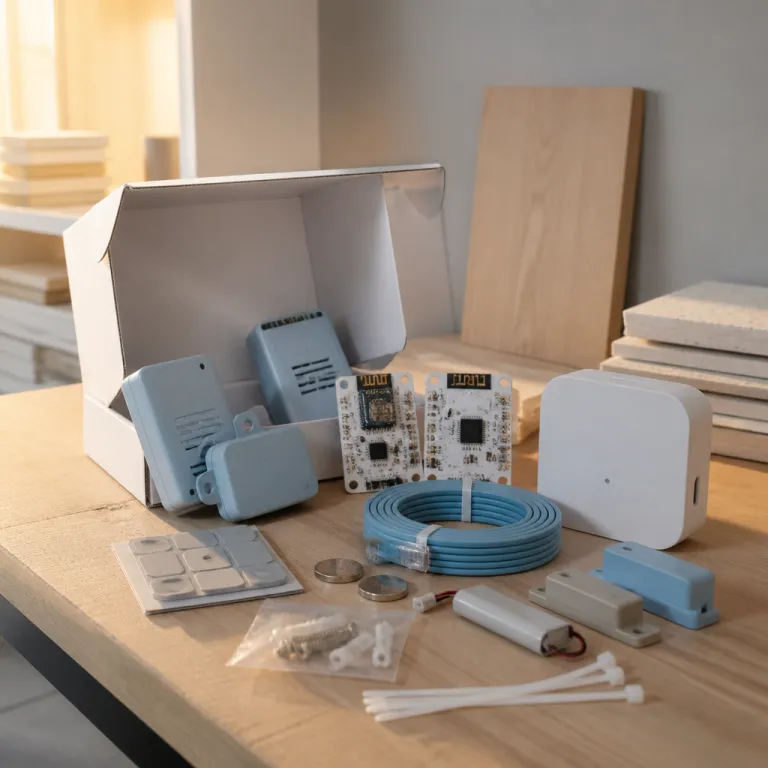
The starter kit: five IoT sensors that change your maintenance playbook
Start with the assets that create the most visible downtime and employee noise. In most Indian GCC offices, that means HVAC compressors, server room infrastructure, lifts, water systems and power backup equipment. A focused predictive maintenance starter kit around these assets gives you quick wins without drowning your facilities team in dashboards.
First, deploy vibration and temperature sensors on HVAC compressors and critical air handling units, because these machines are the single biggest source of comfort complaints and energy costs. IoT based vibration monitoring lets you catch bearing wear or misalignment long before a catastrophic failure, while real time temperature trends highlight blocked filters or gas issues that traditional preventive maintenance checklists often miss. This is predictive maintenance in its most practical form, using IoT driven condition data rather than exotic machine learning models that are hard to maintain.
Second, place water leak sensors under raised floors in server rooms, near restrooms and on terraces where overhead tanks sit. These IoT sensors send real time alerts to maintenance teams before a minor seepage becomes a full blown incident that shuts down a floor and triggers unplanned downtime. Third, add energy sub meters per floor or per zone, UPS battery health sensors and lift shaft temperature sensors to complete a compact condition monitoring layer that covers your highest risk equipment failures.
To keep this manageable, route every sensor alert into a simple workflow instead of scattered WhatsApp messages. A typical flow is: sensor crosses a threshold, the IoT gateway pushes an event to the CMMS, a ticket is auto created with priority and asset tag, the technician receives a mobile notification, updates findings and closes the job with photos and parts used. If you already run a CMMS integration with platforms like Facilio, UpKeep or Limble, connect each IoT sensor to auto create a ticket with the right priority and asset tag. If you do not have a CMMS yet, prioritise a basic system first, because predictive maintenance without structured data collection quickly degenerates into noise and manual spreadsheets.
As you evaluate vendors, insist on clear documentation of how sensor data flows into your existing maintenance models and escalation paths. Ask whether their maintenance IoT platform supports role based access for internal teams and IFM partners, and whether field service technicians can close IoT based tickets directly from a mobile app. For a deeper view on how Indian facility management vendors position these offerings, study the vendor landscape analysis on facility management companies in India before you sign multi year contracts.
Vendors, platforms and pricing: what Indian offices actually pay
Indian office managers no longer need to import exotic hardware or pay global consulting rates for IoT deployments. A practical predictive maintenance stack for Indian offices can be built entirely with Indian or India focused vendors who understand GST, local field service realities and the quirks of multi tenant commercial buildings. The key is to separate marketing language from the specific maintenance costs, data analytics capabilities and support commitments you actually need.
Zenatix, now part of Ecolibrium, offers IoT based energy and equipment monitoring that fits well for multi city portfolios with central dashboards. 75F focuses on HVAC optimisation using IoT sensors, sensor data analytics and machine learning models to balance comfort and energy in real time across zones. Facilio positions itself as a unified CMMS integration and maintenance IoT platform, combining asset registers, condition monitoring, rule based predictive alerts and field service workflows in one interface.
On pricing, expect to see two main models from these vendors and their peers. The first is a hardware plus software subscription, where you pay per IoT sensor or per asset plus a monthly fee for the predictive platform, analytics and support. The second is a pure subscription model where the vendor retains ownership of the equipment and bundles hardware, data collection, data analytics and field service visits into a per square metre or per seat rate.
For a 200 seat office, a focused starter kit might involve 20 to 40 IoT sensors across HVAC, water, power and lifts. At INR 5,000 to 15,000 per sensor including installation and basic software, your upfront spend sits roughly in the range of one or two major HVAC failures plus associated downtime. Internal benchmarks from Indian IT parks show that avoiding two emergency chiller breakdowns in a year can save INR 1,00,000 to 3,00,000, which comfortably covers the initial deployment and part of the subscription. When you compare that to the potential savings and the strategic signal from large technology investors about office tech budgets, it aligns with the broader shift described in analyses of India focused AI and office technology investments.
Whatever vendor you choose, lock in service level agreements that tie their fees to measurable outcomes. A concrete example: 99.5% uptime for HVAC and UPS during business hours, response within 60 minutes for critical water leak alerts, and closure of high priority predictive tickets within 24 hours. Link a portion of payments to reductions in unplanned downtime, fewer emergency field service calls and documented drops in maintenance costs per asset category. The more your contracts are based on real time performance data instead of vague promises, the more leverage you gain in every future negotiation.
From data to decisions: building a maintenance control room
Installing sensors is the easy part; turning their data into decisions is where most offices stumble. Dashboards multiply, alerts flood WhatsApp groups and your teams quietly revert to reactive maintenance because nobody has time to interpret charts. To avoid this, treat predictive maintenance and IoT enabled monitoring as a governance project, not a gadget project.
Start by defining three or four core KPIs that link directly to business impact. For example, track unplanned downtime hours per month for HVAC and power, emergency field service visits per quarter and maintenance costs per square metre for your top five asset classes. Then configure your IoT based platform so that every alert, every ticket and every technician action feeds these KPIs through clean data collection and structured data analytics.
Next, design simple rules that convert sensor data into clear actions for maintenance teams. A vibration threshold breach on a chiller might auto create a CMMS ticket with a two day SLA, while a water leak sensor in the server room should trigger an immediate phone call and a one hour response. As a starting point, many Indian offices use vibration RMS thresholds of 10 to 12 mm/s on large HVAC motors and temperature deltas of 3 to 5°C above normal operating range to trigger inspection. Over time, you can refine these rule based thresholds using machine learning models that learn from past failures and false alarms, but you do not need advanced AI to start.
Where AI does help today is in pattern recognition across large volumes of sensor data and historical tickets. Many CMMS integration platforms now offer basic anomaly detection that flags unusual energy spikes, abnormal temperature swings or repeated equipment failures in specific zones. For a practical view on what is actually deployable in Indian back offices, the analysis on AI for office administration is a useful benchmark for separating hype from tools you can run with a small facilities team.
Finally, institutionalise a monthly maintenance review that looks like a mini control room meeting. Bring your IFM partner, key internal stakeholders and vendor representatives into one room, project the predictive maintenance dashboards and walk through each major asset category. When everyone sees the same real time monitoring data, the conversation shifts from blame for past failures to joint planning for the next quarter.
ROI, contracts and a Monday morning checklist for facilities leaders
For a facilities manager, the real test of predictive maintenance is not the elegance of the technology stack. The test is whether your CFO sees a credible reduction in maintenance costs, fewer complaints from business units and a tighter link between asset health and productivity. That means you need a simple, defensible ROI model that translates IoT sensors and analytics into rupees and hours.
One avoided HVAC breakdown in a large floor plate can easily cost between INR 50,000 and 2,00,000 in emergency repairs, temporary cooling arrangements and lost productive time. Against that, a set of IoT sensors for vibration, temperature and energy on the same equipment might cost INR 5,000 to 15,000 per unit with a payback period of roughly six to twelve months. A 12 month example from a Bengaluru office showed a 25% drop in emergency call outs and a 15% reduction in energy use on conditioned floors after deploying predictive monitoring, which translated into savings well above the annual subscription. When you add the softer benefits of fewer escalations, better field service planning and cleaner audit trails, the predictive maintenance business case for Indian offices becomes hard to ignore.
To make this tangible, use a Monday morning checklist that you can run in any Indian office. First, list your top ten assets by criticality and past failures, including HVAC machines, UPS systems, lifts and water pumps. Second, map which of these already have any form of condition monitoring or IoT sensors, and where you still rely purely on preventive maintenance schedules and reactive calls.
Third, run a quick data collection exercise from the last twelve months of tickets and invoices. Capture the number of equipment failures, total unplanned downtime hours, emergency field service visits and associated maintenance costs for each asset class. This gives you a baseline against which to measure the impact of any IoT based or maintenance IoT deployment you approve.
Fourth, update your AMC and IFM contracts so that they explicitly reference predictive maintenance, IoT sensors, sensor data ownership and CMMS integration responsibilities. Insist that vendors share anonymised data analytics outputs with you, not just PDF reports, so your internal teams can run their own models and challenge assumptions. In the end, what matters is not the AMC line item, but the downtime it hides.
FAQ
How is predictive maintenance different from preventive maintenance in an office?
Preventive maintenance follows a fixed schedule, such as quarterly servicing of HVAC or monthly checks on UPS batteries. Predictive maintenance uses IoT sensors, real time monitoring and data analytics to service equipment only when sensor data shows early signs of wear or failure. This reduces unnecessary visits while cutting unplanned downtime and extending asset life.
What is the minimum office size where IoT based maintenance makes sense?
IoT based predictive maintenance now makes economic sense even for a single 200 seat office floor. The cost of a focused starter kit of IoT sensors is often lower than one major HVAC or UPS failure in a year. Larger multi floor or multi city offices gain even more value because they can centralise monitoring and standardise maintenance models across sites.
Do I need a CMMS before deploying IoT sensors in my building?
A basic CMMS is strongly recommended before you scale IoT sensors across your office. Without CMMS integration, alerts from sensors tend to get lost in chats and emails, and you cannot link them to tickets, SLAs or maintenance costs. Even a simple cloud CMMS helps structure data collection, assign tasks to maintenance teams and track the impact of predictive maintenance over time.
How should I handle data ownership and privacy with IoT vendors?
Your contracts should clearly state that your organisation owns all sensor data and derived analytics related to your assets. Vendors can use anonymised data to improve their models, but they should not share identifiable information about your equipment or operations without consent. This protects your negotiating position in future AMC discussions and ensures compliance with internal data governance policies.
What skills do maintenance teams need to work with IoT predictive tools?
Maintenance teams do not need to become data scientists, but they must be comfortable reading dashboards and interpreting basic trends. Training should focus on understanding sensor alerts, updating CMMS tickets accurately and following new data driven maintenance playbooks. Over time, a few champions in the team can learn more advanced analytics to refine thresholds and suggest improvements to the predictive maintenance setup.