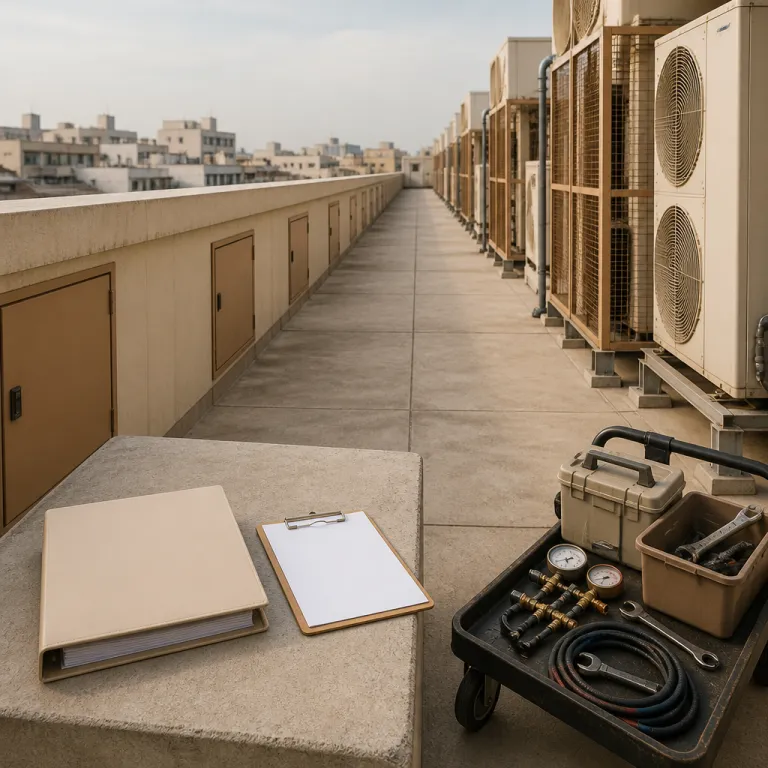
AMC renegotiation strategies for Indian offices
Why AMC renegotiation in Indian offices cannot wait for expiry
Most office managers in India treat every AMC renegotiation as a once-a-year ritual. By the time the annual maintenance discussion starts, the vendor has already baked in a higher monthly fee and your company has adjusted its term financial budget around it. In many Indian companies the contract simply rolls over, and the real cost of maintenance, downtime and lost productivity stays hidden inside a generic facilities or facility management line item.
Mid-contract renegotiation of any maintenance contract is not only possible, it is often where the strongest leverage sits for an office head. When your headcount drops by 20 percent or two floors in Bengaluru get consolidated into one, the original annual maintenance scope, SLA structure and response time commitments no longer match reality. If you wait until the end of the contract, the vendor will argue that the cost and capital already deployed in the system cannot be reversed, and your CFO will quietly accept the same financial structure for another cycle.
Think of every AMC as a living asset management instrument, not a static legal document. The office environment in India changes quickly, and your maintenance needs, business hours patterns and hours-critical windows change with it. A smart Indian office manager uses these shifts to reset cost, improve management control and reduce operational risk long before the renewal date appears on the calendar, often unlocking 5–10 percent savings on the remaining term without any visible drop in service quality. In one 2022 renegotiation for a 150,000 sq.ft technology office in Pune, a mid-term review led to a 7.8 percent reduction in AMC spend after weekend coverage and night-shift staffing were aligned to actual occupancy, with no measurable impact on uptime.
Trigger points for mid-contract AMC renegotiation in Indian companies
The cleanest trigger for AMC renegotiation in an Indian office is a structural change in occupancy. When headcount in your company moves more than 15 percent up or down, or when you shut one Gurgaon facility and shift teams into a Noida office, the original maintenance contract assumptions on manpower, system load and hours-critical coverage are no longer valid. At that moment you have a legitimate business case to reset both cost and SLA terms without waiting for the annual maintenance anniversary.
Scope creep is the second big signal that your AMC renegotiation agenda in an Indian office should move from draft to action. If your vendor has quietly taken on extra preventive maintenance tasks, added weekend support beyond normal business hours or started managing multiple assets like UPS, HVAC and fire systems that were not in the original contract, you are already paying in hidden ways through cash flow strain and lost productivity. A structured comment log of every extra request, every change in response time pattern and every deviation from the original SLA gives you hard data to take into a renegotiation meeting.
Persistent SLA breaches form the third clear trigger, especially where resolution time failures create operational risk for critical systems. When a provider fails repeatedly on uptime or leaves hours-critical processes like trading floors, development labs or customer support centres exposed, you are no longer bound to accept the same monthly fee or the same force majeure language. This is where a strong AMC contract format for Indian offices, with clearly defined penalties and step-in rights, becomes your best friend in the room. A practical checklist helps: (1) log incident date and time, (2) record impact on operations, (3) capture vendor response and resolution time, (4) note whether penalties were applied, and (5) summarise patterns before you sit down to renegotiate.
Using market benchmarks and scope consolidation as leverage
Indian office managers often underestimate how competitive the facilities and maintenance market has become. Integrated facility management players like Quess, BVG and CBRE are expanding aggressively into Tier 2 cities, and that expansion means your existing vendor knows there is always another company willing to take the same AMC at a sharper cost. You do not need a full RFP to use this; two or three quiet benchmark conversations with peer office heads in similar Indian companies will give you a realistic price per square foot and a sense of standard SLA coverage. For example, mid-size offices in major metros often see comprehensive technical AMC plus soft services in the range of ₹6–₹10 per sq.ft per month, with basic technical-only contracts closer to ₹2–₹4 per sq.ft depending on asset complexity. A 2021 CBRE facilities benchmarking note for large Indian occupiers cited similar bands for blended IFM contracts in Bengaluru and Hyderabad, with higher rates only where 24x7 critical operations were in scope.
Once you have those benchmarks, your AMC renegotiation discussion in an Indian office shifts from opinion to data. If your current vendor charges a higher monthly fee for the same maintenance scope and weaker response time, you can calmly present the gap as a financial and asset management issue rather than a complaint. A short email that summarises benchmarked business hours coverage, typical resolution time commitments and standard force majeure carve-outs in comparable contracts often resets the tone of the negotiation in your favour.
Scope consolidation is the other underused lever in Indian offices, especially where you manage multiple vendors for housekeeping, security and technical maintenance. Even if you do not plan to move to a single IFM contract immediately, you can show what a combined scope quote from a CBRE-style integrated mandate would look like and use that as a reference point. The warning from one well-known mall mandate in Mumbai, where CBRE won the business in 2019 by bundling security, housekeeping and engineering into a single performance-based contract with a blended rate around ₹8 per sq.ft, is simple for every mid-size office head in India: if you do not understand your own leverage, the vendor will happily define it for you.
Turning AMC clauses into business tools, not legal boilerplate
Most AMC documents in India read like recycled legal templates, but every clause can become a management lever if you treat it as part of your operating system. Start with the SLA schedule; define response time and resolution time separately for normal issues and for hours-critical incidents, and tie each band to clear financial consequences. When a provider fails repeatedly on these metrics, you are not just annoyed, you are contractually empowered to reduce the monthly fee, demand additional manpower or even reallocate part of the scope.
Outcome-based clauses are the next frontier for AMC renegotiation strategies in Indian offices. Instead of paying purely for headcount, link a portion of the maintenance contract value to uptime of critical systems, occupant satisfaction scores and energy performance against baseline, which directly affects cash flow and long-term capital planning. One quarter of new facility mandates in large Indian companies already include such outcome metrics, and mid-contract renegotiation is your chance to retrofit similar logic into older agreements. Typical structures link 5–15 percent of the monthly fee to agreed outcomes, with bonuses for exceeding targets and clawbacks when performance drops below a defined floor.
Do not ignore the so-called boilerplate sections either, especially indemnity, limitation of liability and force majeure. Poorly drafted language here can shift operational risk back onto your company when a vendor fails during a flood, power crisis or political shutdown, even though the office still suffers lost productivity and cash losses. A practical guide to the eight clauses that actually protect you in an AMC contract for Indian offices is worth keeping on your desk every time you sit down with a vendor and your CFO. At minimum, your template should include: (1) SLA bands and penalties, (2) step-in rights, (3) clear force majeure carve-outs, (4) liability caps, (5) insurance requirements, (6) termination for convenience, (7) data and access rights, and (8) a simple dispute resolution path.
Running the renegotiation meeting like a business review
The most effective AMC renegotiation meetings in Indian offices look less like arguments and more like quarterly business reviews. You walk in with three things; SLA performance data, benchmark pricing and a clear scope map that shows how the office has changed since the contract was signed. The vendor walks in with their own cost structure and capital deployment story, and your job is to align both into a sustainable, long-term arrangement that protects cash and reduces operational risk.
Start by framing the conversation around shared objectives rather than pure cost cutting, especially when your CFO joins the room. Explain how better preventive maintenance and tighter asset management will reduce breakdowns, protect cash flow and generate measurable annual savings over the remaining term financial horizon. Then move into specifics; show where business hours coverage is misaligned with actual office usage, where hours-critical windows like trading or production shifts need stronger support, and where the current maintenance contract overpays for low-value tasks. For example, if a 20 percent headcount drop in a 1,000-seat office has already allowed you to shut one floor and cut housekeeping and security posts by two people per shift, you can demonstrate how a similar 20 percent reduction in technical manpower and consumables should flow through into the AMC fee.
Close with a structured proposal that covers revised pricing, updated SLA bands, clarified force majeure language and a simple governance rhythm for the rest of the contract. A monthly fee review for the first quarter, followed by quarterly joint inspections of critical systems, keeps both sides honest and gives you early warning if the provider fails to adapt. A basic working template for your renegotiation pack should include three elements: (1) an SLA table with response and resolution targets plus penalty percentages, (2) an evidence log summarising incidents, scope changes and benchmark data, and (3) a one-page meeting agenda that moves from performance review to commercial discussion to next steps. The real cost of running an office in India goes far beyond rent and AMC, and the smartest office managers treat every renegotiation as a chance to rewrite that equation in their favour, focusing not on the AMC line item, but the downtime it hides.
Downloadable checklist and email template (copy-paste ready)
One-page AMC renegotiation checklist:
1) Confirm trigger event (occupancy change, SLA breach, scope creep).
2) Update asset register and critical systems list.
3) Compile last 6–12 months of SLA and incident data.
4) Gather benchmark rates (₹/sq.ft) and typical AMC SLA norms.
5) Map current scope versus original contract scope.
6) Draft proposed SLA bands, penalties and outcome metrics.
7) Quantify savings target (5–10 percent of remaining term) and risk reduction.
8) Prepare meeting agenda, decision log and follow-up cadence.
Sample email to initiate AMC renegotiation:
“Subject: Mid-term review of AMC for [Location] office
Dear [Vendor Name],
Over the last [X] months, our [City] office has seen material changes in occupancy and operating hours. In line with our standard facility management governance, we would like to schedule a mid-term review of the existing AMC to realign scope, SLA commitments and commercials with the current environment.
We will bring updated occupancy data, incident logs and benchmark information to the discussion and would appreciate your inputs on cost drivers and optimisation opportunities from your side as well.
Please share two or three suitable time slots over the next fortnight so we can block a 60-minute review session.
Regards,
[Your Name]
[Designation]”
FAQ
When is the best time to start AMC renegotiation in an Indian office ?
The best time to start AMC renegotiation is as soon as a structural change hits your office, not at contract expiry. Headcount shifts above 15 percent, floor consolidation, new critical systems or repeated SLA breaches all justify a mid-term review. Waiting until renewal only reduces your leverage and locks in another cycle of suboptimal terms.
How can I use benchmarks without running a full RFP process ?
You can quietly collect benchmark data by speaking with two or three peer office managers in similar Indian companies and asking about their AMC rates, SLA norms and scope. Combine this with indicative quotes from one or two IFM providers to understand current market pricing. Present these numbers as reference points in your renegotiation, not as threats to switch vendors.
What data should I carry into an AMC renegotiation meeting ?
Carry at least three sets of data; SLA performance reports showing response and resolution times, a clear map of scope changes since the contract was signed, and benchmark pricing from comparable offices. Add a simple financial view that links downtime incidents to lost productivity and cash impact. This shifts the discussion from opinions to measurable business outcomes.
How do outcome based clauses work in an AMC for Indian offices ?
Outcome based clauses tie part of the AMC payment to results such as system uptime, occupant satisfaction or energy savings, instead of only paying for headcount or visits. You define clear targets and measurement methods, then link a percentage of the monthly fee to achieving those outcomes. This aligns the vendor’s incentives with your office’s operational and financial goals.
What should I do if my AMC vendor consistently misses SLA targets ?
If your vendor consistently misses SLA targets, first document every breach with timestamps, impact and any escalation. Use this record to trigger the penalty or remediation mechanisms already written into your contract, and request a formal performance improvement plan. If performance does not improve within an agreed period, you have a stronger basis to reduce scope, renegotiate price or prepare an orderly transition to a new provider.