Hybrid work in India is set by seats, not by policy PDFs
Hybrid work in India is not failing because HR wrote weak policies. It is failing in many offices because the workplace infrastructure and facility management models still assume a five day working office with fixed seats and predictable employees. When your workforce has flexible work on paper but a rigid office space reality, the hybrid work India facilities story is written by chairs, not by town halls.
Look at your own office on a typical week and map the working model honestly. Mondays are half empty, Tuesdays and Wednesdays are overloaded, and Thursdays wobble between chaos and calm while Fridays drift toward remote work by default. This anchor day dynamic is not a culture problem ; it is a seat supply and access problem that any serious management hybrid strategy must confront in real time, using data rather than sentiment.
Indian HR leaders keep publishing hybrid work playbooks, but employees quietly optimise for commute, food and family. In Bengaluru, a 90 minute one way commute and unpredictable rain push employees to cluster their in office work into two or three anchor days, while in Mumbai BFSI hubs the constraint is often shared office space and client meeting schedules. When the working model is shaped by metro lines and tiffin timings, the only sustainable lever you control as an office manager is how your facility, technology and work solutions shape the actual work environment.
The seat supply curve is the hidden KPI behind every hybrid complaint you hear. At a 1.0 seat per employee ratio, you get comfort but pay for empty chairs on low attendance days, while at 0.65 seats per employee you force behavioural change and collaboration but risk daily escalations if your booking systems and collaboration tools are weak. Many Indian GCCs sit at around 0.8 seats per employee, which can work if your access rules, remote access options and user experience are tuned to the local indian workforce reality rather than a global template.
In Whitefield tech parks, I have seen 0.65 seat ratios succeed only when office space is zoned by team cluster and supported by strong facility management partners like CBRE or JLL. The same ratio in a Gurugram sales office without clear work models and without reliable collaboration tools turns into a daily fight for meeting rooms and parking. Hybrid work is not a philosophy in these cases ; it is a capacity planning exercise that either respects the employee experience or burns it down slowly.
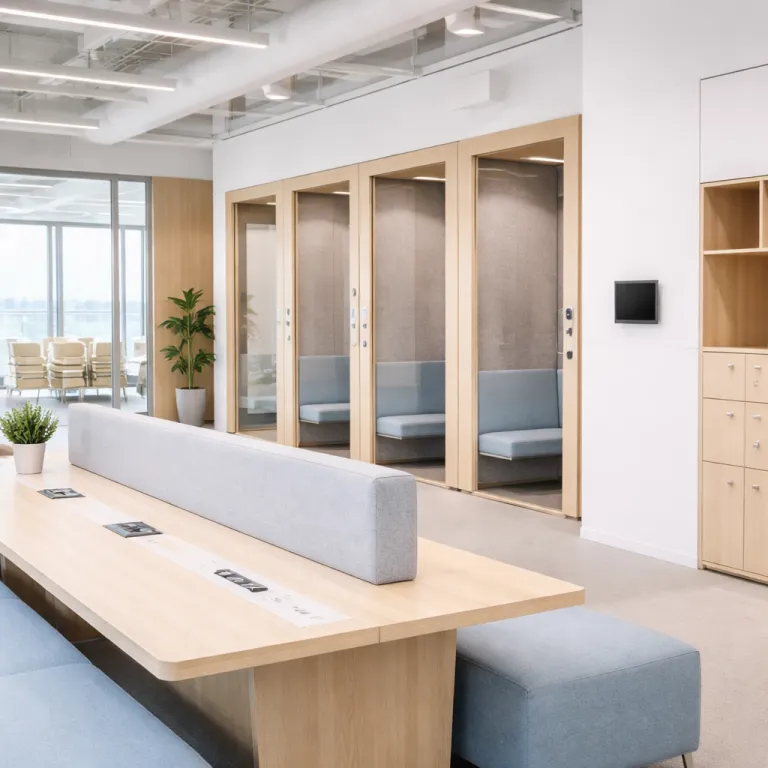
Hybrid work India facilities leaders need to stop treating policy PDFs as the main lever. Your real levers are seat density, meeting room design, remote work enablement and the way your infrastructure and security stack support flexible work without punishing employees who live far away. When you treat the workplace as a human centric system rather than a static facility, you start to see how small changes in work solutions and access rules can shift the entire working model.
Anchor days, booking chaos and the real failures of hybrid systems
The anchor day pattern of Tuesday to Thursday overload is not going away. Labour Codes that codify work from home and hybrid work by mutual consent will only harden employee expectations that they can choose their working days, while HR town halls politely asking for more even distribution will keep failing. As an office manager in India, you either design hybrid work India facilities around this reality or you keep firefighting ghost bookings and corridor escalations.
Start with the booking system that sits between your workforce and your office space. In many indian workplaces, reservation tools are treated as simple calendars, so employees hoard desks and meeting rooms across multiple days, then quietly work remote when plans change without cancelling. The result is a working office that looks full in the system but half empty on the floor, while walk in employees cannot access a seat and blame facility management for poor planning.
Ghost bookings are only one failure mode ; VIP overrides are worse. Senior leaders often demand fixed cabins or priority access to prime meeting rooms, which breaks the human centric logic of any hybrid work model and signals to employees that rules are optional. When your collaboration tools show no free rooms but your physical walk through reveals three empty cabins, you know your management hybrid framework has been captured by hierarchy rather than by data.
There are practical levers you can pull without waiting for HR to rewrite policy. Meeting room auto release after 10 or 15 minutes of no check in, hot desk zones aligned to team clusters, and visitor host pairing rules that force employees to be present when guests arrive all change behaviour quietly. A pre monsoon facilities audit style checklist, like the one many Indian managers use to prepare for heavy rain, can be repurposed as a hybrid systems audit to stress test your access rules, your remote access capacity and your collaboration infrastructure under peak anchor day load.
Think of your workplace as a network of micro facilities rather than one big office. A Bengaluru GCC might run a hub and spoke model with a central campus plus satellite offices in Outer Ring Road and a flex space in HSR Layout, while a Pune R&D centre might combine leased office space with a managed coworking floor. Each facility has its own security, technology and work environment constraints, so your work solutions and work models must be tuned location by location, not copy pasted from a global playbook.
When you run that hybrid systems audit, borrow the discipline you already apply to seasonal maintenance. The same way a structured pre monsoon facilities audit checklist prevents water ingress and electrical failures, a quarterly hybrid audit can surface patterns like chronic overbooking on Wednesdays, underused collaboration zones or poor remote work connectivity in certain teams. The KPI you want from this exercise is not just attendance rate but an attendance predictability index that tells you how stable your daily headcount is week over week.
Once you track predictability, you can have a different conversation with HR and finance. Instead of arguing about whether hybrid work is good or bad, you can show how a more even distribution of employees across the week reduces canteen queues, elevator wait times and shuttle costs, while improving employee experience scores and real estate utilisation. Policy becomes a support act ; the main show is how your facility management and technology stack shape the lived work environment.
Designing human centric hybrid infrastructure for Indian realities
Hybrid work India facilities that actually function start from one principle. The workplace must be designed around the lived constraints of indian employees, not around a global slide deck about future work and shiny technology. Travel time, food culture, family calls and even local festivals shape when people can work in the office and when they must work remote.
In Bengaluru, Chennai and Hyderabad, the commute is the first design variable for any working model. Employees who live 20 kilometres away will not come in for a single one hour meeting, so your collaboration tools and remote access policies must support meaningful remote work on some days and deep in person collaboration on others. In Mumbai and Delhi NCR, the constraint is often real estate cost and shared office space, which pushes companies toward hub and spoke footprints and more aggressive seat sharing ratios.
Hub and spoke adoption among Indian companies is already high, with many GCCs running a headquarters plus satellite plus flex model. Colliers and other real estate advisors describe scalable footprints where a central office anchors culture while smaller spokes in Thane, Noida or peripheral Bengaluru reduce commute pain and support flexible work. For an office manager, this means your facility management playbook must handle multiple facilities with different security, infrastructure and access rules while still delivering a consistent employee experience.
Technology can help, but only if you resist the vendor buzzwords and focus on operations. Artificial intelligence features in workplace apps can predict peak days and suggest staggered attendance, yet they fail if your data on bookings and badge swipes is dirty or incomplete. A simple, well configured calendar integration, like the setups many Indian firms run with tools similar to NetSuite for Outlook in office management, often delivers more value than a flashy AI dashboard that nobody trusts.
When you evaluate workplace technology, ask one blunt question. Does this improve user experience for employees trying to plan their work week, or does it mainly generate reports for management? Human centric design in hybrid work means employees can see real time seat availability, book collaboration spaces easily, and switch between remote work and office work without wrestling with access cards, VPN tokens or opaque approval chains.
Security and compliance matter, especially in BFSI and healthcare GCCs, but they cannot be excuses for clumsy systems. You can design secure remote access with clear device policies and network segmentation while still allowing employees to work from home two days a week without begging for exceptions. The best indian examples pair strong infrastructure and security controls with simple, transparent rules that respect employee autonomy and treat the workplace as a service, not as a favour.
Hybrid work India facilities that thrive in this environment share one trait. Their office managers think like product owners for the work environment, constantly iterating on work solutions, testing new work models and measuring the impact on employee experience and business outcomes. The office stops being a static facility and becomes a managed platform for collaboration, where every square metre and every access rule is tuned to how people actually work.
From admin cost centre to hybrid operating system for the business
If you manage facilities for a GCC or large indian enterprise, you sit on leverage. Hybrid work India facilities are now the operating system that determines how quickly teams can collaborate, how reliably leaders can plan and how efficiently real estate rupees are spent. The shift is subtle but real ; office management is no longer about housekeeping checklists, it is about shaping the working model of the entire workforce.
To use that leverage, you need metrics that speak the language of CFOs and CHROs. Attendance predictability index is one such KPI, measuring how much daily headcount varies from the expected pattern and how that volatility affects canteen capacity, shuttle routes and meeting room demand. When you show that a more stable pattern cuts overtime for facility staff, reduces food wastage and improves employee experience scores, you move the conversation from cost to value.
Real estate strategy is another arena where office managers can lead rather than follow. The per seat maths of coworking versus leased office space in India is now well documented, and detailed analyses of per seat cost comparisons show how flexible work models can reduce long term commitments without sacrificing quality. When you bring this level of data into discussions with global real estate teams, you can argue for hub and spoke or hybrid footprints based on numbers, not on fashion.
Facility management vendors are also evolving, but you must hold them to higher standards. Integrated facility management contracts with players like Sodexo, Compass or ISS should now include SLAs on hybrid readiness, such as response times for reconfiguring collaboration zones, supporting pop up project rooms or scaling services up and down with attendance. The goal is to align vendor incentives with your need to run a responsive, human centric workplace rather than a static working office frozen in a pre hybrid era.
On the technology side, treat your workplace stack as a product roadmap, not as a one time project. Start with reliable basics like access control, Wi Fi and booking tools, then layer in analytics that show real time utilisation of office space, meeting rooms and collaboration areas across all your facilities. Only after you trust the data should you consider artificial intelligence features that forecast demand or suggest new work models, because bad data plus AI simply automates confusion.
The final shift is mindset. You are not just running a facility ; you are running the physical and digital platform on which hybrid work, remote work and flexible work all depend, and your decisions shape whether employees experience the workplace as friction or as support. When you frame your role this way, every rupee spent on infrastructure, security or work solutions is judged not by the AMC line item, but by the downtime it hides.
Key figures shaping hybrid workplaces in India
- Hybrid and remote work remain the default expectation for many Indian white collar employees, with multiple HR tech surveys showing that a majority of staff prefer two to three days of office work per week rather than full time presence.
- Hub and spoke or multi site footprints are now used by a large share of Indian companies, with real estate advisors reporting that most large occupiers combine a central headquarters with satellite offices and flexible spaces to reduce commute times and improve employee experience.
- Seat sharing ratios between 0.7 and 0.85 seats per employee are increasingly common in Indian GCCs, as facility management teams seek to balance real estate costs with the need to accommodate peak anchor days without chronic overcrowding.
- Workplace technology adoption has accelerated, with many enterprises deploying booking systems, collaboration tools and access control integrations that provide real time visibility into office space utilisation and support management decisions about future work models.
- Indian labour regulations are gradually formalising work from home and hybrid arrangements, reinforcing the need for office managers to design secure remote access, robust infrastructure and clear facility policies that align with both compliance and employee expectations.
