Why a pre-monsoon office audit in India is really a contract audit
Every serious pre-monsoon office audit in India starts with one blunt question. If your office in any major city loses power or floods for a day, will the revenue loss be higher than the cost of the last three years of AMCs you quietly renewed? For many mid-size Indian offices, one day of downtime can wipe out ₹25–50 lakh in billable work or transaction revenue. That range is consistent with industry benchmarks from NASSCOM and FICCI reports on IT/ITES productivity losses, which peg average revenue per employee per day in the ₹8,000–₹15,000 band for metro offices. The answer to that question will change how you read every vendor clause before the rainy season hits.
Office managers in India sit between demanding business heads and opaque facilities vendors, while municipal corporation officials and building owners trade blame once the monsoon exposes every leak. When you treat the pre-monsoon walk-through as a live exam of your contracts, you stop accepting generic checklists and start asking how each line item will ensure that specific risks in your buildings are actually mitigated. The real estate story is not about shiny new buildings in a trending India news article, it is about whether your existing building can conduct structural resilience checks before the first heavy shower, in line with basic IS codes on drainage slopes, earthing, and lightning protection. For example, IS 1200 (Part 16) covers measurements for paving and drainage gradients, IS 3043:2018 sets out earthing requirements, and IS/IEC 62305 deals with lightning protection systems that your landlord and vendors should already know.
Look at the latest news every rainy season and you will see the same pattern. Waterlogged basements in Delhi, exposed electrical wiring in older office towers in Mumbai, and civic blame games between each municipal corporation and private landlords repeat like an IPL schedule. A serious pre-monsoon office audit in India treats those news clips as a checklist of what not to allow inside your own office building, and as a reminder that every vague clause in your lease or AMC will be tested by the first cloudburst. If your agreements do not specify inspection dates, response times, and workmanship warranties in writing, the monsoon will expose that gap faster than any internal review.
The 12 physical checks before 15 May and the AMC clauses behind them
Start your pre-monsoon round with the roof and façade, because every leak in June was visible as a hairline crack in April. Walk the terrace of your office building, check all parapet walls, inspect façade sealant around glazing, and map each defect to the waterproofing and façade maintenance clauses in your civil AMC so that officials from your landlord side cannot later claim ignorance. If your lease or privacy policy annexure is silent on terrace access, push to amend it today so you can ensure that your équipe can actually inspect what you are paying for. A typical clause could read: “Clause 4.1 – The Lessee shall have reasonable access to the terrace and façade areas, upon 24 hours’ notice, for inspection and verification of waterproofing and structural maintenance works.”
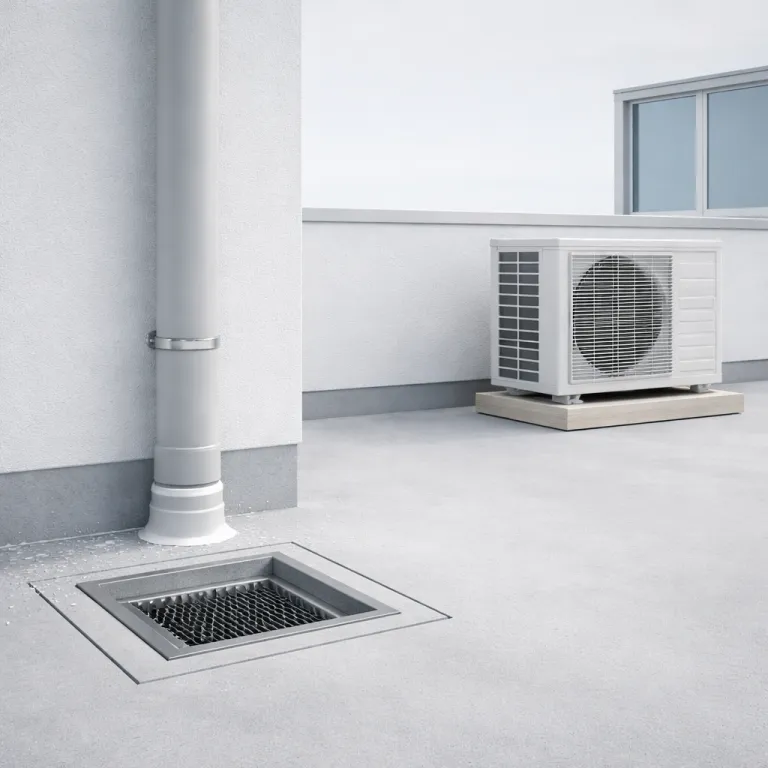
Next, move to drainage and basements, where monsoon audits usually fail first in Indian buildings. Inspect all rainwater downpipes, terrace drains, and basement sump pumps, and insist that your vendor conduct structural checks on gratings, covers, and pump foundations, because one loose cover can cause both injury and litigation in the High Court if an accident occurs. In cities like Delhi and Bengaluru, where weather today can swing from heat to sudden storms, your office must have a clear log of when each sump, drain, and pump was last serviced, with rights reserved in your contract to demand rework if the result on site does not match the result live in their service reports. As a thumb rule, a typical basement sump pump for a mid-size office should handle at least 10,000–15,000 litres per hour with an automatic float switch and dual power source, in line with the intent of NBC 2016 Part 8 (Building Services) on drainage capacity and redundancy.
Then step into the UPS and DG rooms, which are the real heartbeat of business continuity during the monsoon. Check battery banks for swelling, corrosion on terminals, and ventilation, and tie each observation back to the electrical AMC clauses that cover battery testing, insulation resistance, and exposed electrical terminations. For DG sets, verify fuel tank integrity, breather lines, and bund walls, and lock in May pricing with your diesel vendor before their monsoon surcharges will change your cost assumptions for every hour of backup power you need. Align these checks with basic IS standards on earthing and cable sizing so that your vendor cannot treat safety as a discretionary extra. IS 3043:2018 specifies maximum earth resistance values (typically 1 ohm for critical installations), while IS 732:2019 and IS 1255:1983 provide guidance on wiring and cable laying that you can reference directly in your AMC scope.
| # | Check item | Target date | Sample contract / AMC wording |
|---|---|---|---|
| 1 | Terrace waterproofing and parapet walls | 15 May | “Clause 5.2 – Vendor shall inspect and repair all terrace waterproofing and parapet joints annually before 15 May, with a 12-month leakage warranty covering materials and workmanship.” |
| 2 | Façade sealant and glazing | 10 May | “Clause 5.3 – All façade sealant failures identified in the pre-monsoon inspection shall be rectified within 10 working days at no extra cost, and photographic before/after evidence shall be submitted.” |
| 3 | Rainwater downpipes and terrace drains | 10 May | “Clause 6.1 – All rainwater pipes and terrace drains shall be cleaned and tested for free flow before the monsoon, with photographic evidence and test logs shared for client sign-off.” |
| 4 | Basement sump pumps and gratings | 12 May | “Clause 6.2 – Sump pumps shall be tested on mains and DG power; damaged gratings or covers shall be replaced before monsoon onset, and pump capacity shall be certified in litres per hour.” |
| 5 | UPS room ventilation and battery health | 08 May | “Clause 7.1 – Quarterly battery bank testing and ventilation checks shall be documented, with replacement recommendations shared in writing and minimum autonomy clearly stated.” |
| 6 | DG set, fuel tank, and bund wall | 08 May | “Clause 7.2 – DG fuel tanks and bunds shall be inspected for leaks and integrity, with any defects rectified within 7 days and spill-control measures maintained as per OEM guidelines.” |
| 7 | Main LT panels and earthing | 05 May | “Clause 8.1 – Annual thermography and earth resistance testing shall be completed before 15 May, with reports shared for sign-off and values benchmarked against IS 3043 and IS 732.” |
| 8 | Basement ventilation and exhaust fans | 12 May | “Clause 8.2 – All basement exhaust systems shall be serviced and tested for rated airflow prior to monsoon, with fan current and airflow readings recorded.” |
| 9 | Critical server room drainage and leak detection | 05 May | “Clause 9.1 – Any server room shall have functional leak detection and clear drainage paths, tested and documented annually, with alarm integration to BMS where available.” |
| 10 | Staircase and lobby water ingress points | 10 May | “Clause 9.2 – Door thresholds, seals, and lobby drains shall be inspected and repaired to prevent water ingress, with non-slip treatments applied where required.” |
| 11 | Parking ramps and external slopes | 12 May | “Clause 10.1 – Parking ramps and external slopes shall be checked to ensure positive drainage away from building entrances, and corrective civil works shall be proposed with drawings if ponding is observed.” |
| 12 | Emergency lighting and exit signage | 05 May | “Clause 10.2 – All emergency lights and exit signs shall be tested on backup power, with defects closed before monsoon and test records maintained for statutory inspection.” |
Using BMS data, monsoon audits, and a 30 minute BCP drill to pressure test vendors
Most offices with a Building Management System treat it like a fancy horoscope, glancing at alarms but rarely reading the pattern. For a serious pre-monsoon office audit in India, pull three months of BMS alarms for HVAC, electrical, and pumps, and group them into failure clusters that map directly to your AMCs so that your housekeeping and IFM vendors cannot argue with the data. When you show that the same AHU tripped ten times in April, the vendor cannot hide behind vague explanations about weather today or power quality, because the trend line is visible on a single chart.
Focus on three clusters that repeatedly show up in India news during the rainy season. First, HVAC failures where clogged filters, drain pan overflows, or faulty actuators shut down cooling in one wing of the office, which you can link to missed preventive maintenance visits in the AMC schedule. Second, drainage and pump alarms where basement sumps did not start automatically, which you can tie to neglected float switches or exposed electrical joints that were never sealed properly during earlier monsoon audits. A simple visual aid here—a schematic of a sump pit with pump, float switch, and power supply marked—helps non-technical managers understand exactly what they are signing off on.
Third, electrical anomalies where repeated earth faults or breaker trips point to overloaded circuits or ageing electrical wiring, and here you must insist that your vendor conduct structural reviews of panel loading, cable sizing, and earthing rather than just resetting breakers. Once the data is on the table, run a 30 minute tabletop BCP drill with your admin, IT, and security teams, asking who has the DG start keys, passwords for BMS, and emergency contact numbers, because the result of that drill will change how you write your next vendor scope. Keep the drill live and realistic, not a paper exercise, and treat the gaps you find as key inputs to renegotiating both AMCs and internal responsibilities before the monsoon actually hits. Capture the drill outcomes in a simple CSV checklist or editable PDF so that you can repeat the exercise every year and track improvement.
From DG fuel planning to one page sign off and CFO escalation
Diesel planning is where many otherwise strong office managers in India quietly lose money every monsoon. Instead of accepting whatever rate the fuel vendor quotes once the rainy season starts, build contract language in April that pegs your DG fuel price to a transparent benchmark and caps any monsoon surcharge, so that your cost per hour of backup power is predictable. This is where a sharp admin head earns respect from the CFO, by turning a vague operational line item into a clear financial KPI. A sample clause could read: “Clause 11.3 – DG fuel shall be billed at [Public Sector OMC] retail rate for the city on date of delivery plus a fixed service premium of ₹[X]/litre; no additional seasonal surcharge shall apply.”
After your physical checks and BMS analysis, compress the findings into a one page pre-monsoon office audit in India sign-off note. List the twelve key checks, the status of each, the vendor responsible, and the risk rating, and then get signatures from the landlord representative, the IFM or AMC vendor, and HR or business leadership, because that single page is worth more than a forty page report when India news later shows flooded offices across the city. Add a simple rights reserved clause in your email trail stating that any later failure in those areas will trigger penalty discussions, which quietly shifts the balance of power in your favour. Converting this summary into a fillable PDF or spreadsheet template also makes it easier to reuse across multiple locations.
When the audit flags capex items like a failing UPS battery bank or an ageing HVAC compressor, frame the escalation to the CFO in revenue language, not engineering jargon. Show the cost of replacement versus the estimated loss from one day of downtime for your office, using real numbers from your business heads, and remind them that every IPL match night or trending IPL result live spike in traffic will stress your systems further if you run a tech heavy operation. In a market where IFM vendors are consolidating and mid size offices often get generic templates, the office manager who treats the pre-monsoon audit as a live business case, not a compliance ritual, becomes the quiet risk officer every company in India actually needs.
Downloadable one-page sign-off template (copy-paste format)
Pre-Monsoon Office Audit Sign-Off – [Building / Office Name]
Date: [DD/MM/YYYY]
City: [City]
Summary
Total critical checks: 12
Closed: [X] | Open: [Y] | High-risk open items: [Z]
Checklist status
- Terrace waterproofing and parapet walls – Status: [OK / Pending] – Owner: [Landlord / Vendor]
- Façade sealant and glazing – Status: [OK / Pending] – Owner: [Vendor]
- Rainwater downpipes and terrace drains – Status: [OK / Pending] – Owner: [Vendor]
- Basement sump pumps and gratings – Status: [OK / Pending] – Owner: [Vendor]
- UPS room ventilation and battery health – Status: [OK / Pending] – Owner: [Vendor]
- DG set, fuel tank, and bund wall – Status: [OK / Pending] – Owner: [Vendor]
- Main LT panels and earthing – Status: [OK / Pending] – Owner: [Vendor]
- Basement ventilation and exhaust fans – Status: [OK / Pending] – Owner: [Vendor]
- Critical server room drainage and leak detection – Status: [OK / Pending] – Owner: [Landlord / IT]
- Staircase and lobby water ingress points – Status: [OK / Pending] – Owner: [Landlord]
- Parking ramps and external slopes – Status: [OK / Pending] – Owner: [Landlord]
- Emergency lighting and exit signage – Status: [OK / Pending] – Owner: [Vendor]
Risk notes
High-risk open items and target closure dates: [Brief description]
Signatures
Landlord / Building Owner: __________________ Date: _______
IFM / AMC Vendor Representative: ____________ Date: _______
Internal Approver (HR / COO / Business Head): ______ Date: _______
Reservation of rights
“The company reserves the right to review penalties, recover costs, or seek other remedies if any of the above areas, marked as completed, fail during the monsoon due to poor workmanship or non-compliance with agreed scopes.”
Frequently asked questions about pre-monsoon office audits in India
How early should an office manager start a pre-monsoon office audit in India ?
Begin at least six to eight weeks before the expected monsoon onset for your city, so that vendors have time to complete corrective work. This timing allows you to align with municipal corporation advisories, negotiate DG fuel rates before seasonal surcharges, and schedule any conduct structural repairs without disrupting peak business periods. Starting early also gives you room to validate that exposed electrical points, drainage lines, and HVAC systems perform correctly in the first pre-monsoon showers, and to update your internal CSV or PDF checklists based on what you observe.
Which areas of an office building fail most often during the rainy season ?
The most common failure points in Indian office buildings during the rainy season are terrace waterproofing, façade sealant, basement drainage, and electrical rooms with poor ventilation or ageing electrical wiring. BMS logs often show repeated alarms from sump pumps, AHUs, and panel boards in the three months before the monsoon, but these signals are ignored until a real incident occurs. A focused pre-monsoon office audit in India should therefore prioritise roofs, basements, UPS and DG rooms, and all exposed electrical terminations, supported by simple diagrams or photos that make issues obvious even to non-technical stakeholders.
How can BMS data improve the quality of monsoon audits ?
Building Management System data turns subjective complaints into objective patterns by showing exactly where and when equipment has been tripping or running outside normal parameters. When you group three months of alarms by asset and failure type, you can challenge vendors with specific evidence instead of vague feedback, which makes it harder for them to blame only weather today or power supply issues. This data driven approach also helps you rewrite AMC scopes so that recurring issues in your office are explicitly covered and tracked, with clear SLAs for response and closure.
What should be included in a one page pre-monsoon audit sign off document ?
A practical one page sign off should list each critical area checked, the current status, the responsible vendor or landlord, and a simple risk rating with target completion dates for any open items. It should be co-signed by the landlord representative, the IFM or AMC vendor, and an internal leader such as HR or the COO, creating shared accountability for monsoon readiness. Keeping it concise ensures that senior stakeholders actually read it and remember the commitments when any failure occurs later, and it can easily be converted into an editable PDF or spreadsheet for multi-site portfolios.
How do office managers justify monsoon related capex to the CFO ?
The most effective way is to compare the capex cost with the estimated financial impact of one day of downtime for the office, using real revenue or productivity numbers from business heads. Present scenarios that show how a failed UPS battery bank, a flooded server room, or a non functional DG could affect client deliveries, regulatory deadlines, or customer support metrics. When the CFO sees that a relatively modest capex can prevent a much larger loss, monsoon readiness moves from a discretionary spend to a clear risk management investment, supported by both technical standards and business case math.