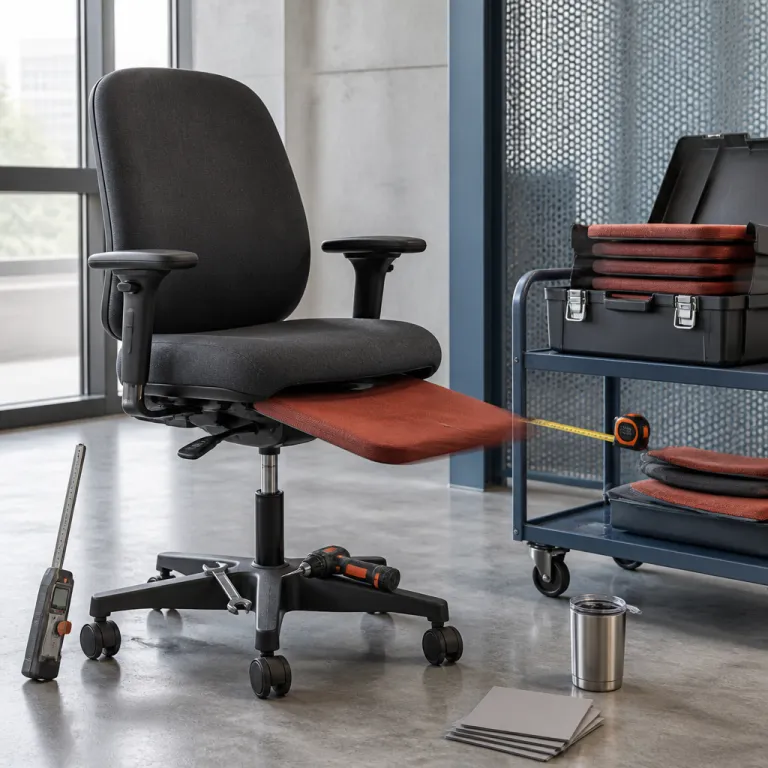
Best office chair for short person in Indian offices
Why Indian office managers must rethink seating for short people
Many Indian office managers still buy every chair to one standard size. This habit quietly penalises short people whose feet dangle and whose seat height never aligns with the desk. Over time, this mismatch erodes comfort, productivity, and even retention in a demanding ergonomic office environment.
When you evaluate the best office chair for short person needs, you are really protecting the entire body from cumulative strain. A poorly chosen office chair without proper lumbar support or adjustable armrests forces petite users to shrug shoulders, lean forward, and twist hips unnaturally. That posture pattern is common in Indian offices where mesh chairs or leather chairs are purchased mainly on price and appearance rather than on seat depth or height range.
Shorter users in Indian service centres, finance teams, and tech support often sit for more than eight hours. For these users, a generic desk chair with a high minimum seat height can compress the back of the thighs and reduce blood flow. Over months, that single product decision can translate into more sick leave, more complaints, and lower engagement scores across your office.
Key ergonomic dimensions office managers must check for petite staff
For any ergonomic chair to work for short people, the seat height must allow feet to rest flat on a flat floor. In practice, that means the minimum seat height should drop to around 38–42 cm (about 15–16.5 inches) for many petite users in Indian companies. If the chair adjustable mechanism cannot reach that range, the user will either dangle or perch on the edge of the seat.
Seat depth is just as critical as seat height when you assess the best office chair for short person requirements. A deep seat that suits tall users will push shorter users forward, removing lumbar contact and eliminating meaningful lumbar support. Look for office chairs with a sliding seat or compact seat depth so that there is a two to three finger gap between the front of the seat and the back of the knee for most users.
Backrest design also matters because the lumbar curve must align with the lower back of petite staff. An ergonomic office setup should include adjustable lumbar features, or at least an adjustable lumbar pad, so that shorter users can position support exactly where the body curves. When you benchmark models, compare options such as an Aeron size A chair versus generic mesh chairs, and use real staff measurements rather than relying on any standard marketing brochure or showroom advice from a single office furniture dealer.
For broader workplace planning inspiration, many Indian office managers study international case studies such as those discussed in this guide on how a landmark corporate office layout can inspire Indian office managers. The same analytical mindset used for space planning should be applied to every desk, every chair ergonomic feature, and every workstation allocated to shorter users. When you align these dimensions carefully, you create a more inclusive office where both petite and taller staff can work comfortably.
Essential features of an ergonomic office chair for petite users
When you shortlist any office chair for petite staff, start with the core adjustable features. A truly ergonomic office chair for short people must offer a generous height range, a compact seat depth, and armrests that move both vertically and horizontally. Without these options, even a premium ergonomic chair becomes a rigid product that supports only a narrow band of users.
Armrests deserve special attention because they stabilise the upper body during typing and mouse use. For shorter users, fixed armrests often sit too high, forcing shoulders to lift and creating neck tension that no headrest can fully offset. Choose chairs with armrests that can drop low enough to let elbows rest at roughly ninety degrees while the user sits close to the desk.
Backrest and lumbar design should include either built in adjustable lumbar or a separate lumbar support mechanism. Many mesh chairs now integrate flexible lumbar bands that move with the spine and support the natural curve of the lower back. For the best office chair for short person scenarios, ensure that the lumbar zone is not positioned so high that petite users miss the support entirely, and consider models with a year warranty that covers both the tilt mechanism and the lumbar components.
Seat cushioning and edge design also influence comfort for petite users who sit for long stretches. A waterfall front edge reduces pressure on the thighs, while a firm but not rigid seat foam keeps the pelvis stable without cutting circulation. For staff with existing back issues such as sciatica, you can refer to specialised guidance on choosing the ideal office chair to alleviate sciatica pain and then adapt those principles to the specific height and body proportions of shorter users.
Balancing price, warranty, and Indian vendor realities
Budget pressure is a daily reality for every Indian office manager who must equip dozens or hundreds of desks. Many procurement teams still default to the lowest price per chair, ignoring how that decision affects shorter users and overall ergonomic risk. A more strategic approach weighs price against durability, adjustability, and the length of the year warranty offered by each vendor.
When you compare office chairs, insist on written specifications for seat height, seat depth, and height range rather than relying on vague labels such as standard or executive. Ask vendors to state the minimum seat height clearly and to confirm whether the chair adjustable gas lift can be swapped for a shorter cylinder if needed. For mesh chairs and fabric chairs alike, verify that the warranty covers the tilt mechanism, the armrests, and the lumbar support components, not just the outer upholstery.
Indian offices often buy mixed batches of chairs over time, which can create inconsistent support for different users. To avoid this, define a clear ergonomic standard that covers office chair dimensions for both petite and taller staff, and then lock those standards into your purchase orders. When you negotiate with suppliers, use concrete examples such as the Aeron size A specification or other global ergonomic chair benchmarks to justify why you need a broader height range and more adjustable lumbar options, even if the initial product price is slightly higher.
For guidance on aligning furniture choices with broader staffing and retention strategies, many managers turn to resources on staffing strategies for Indian office manager recruitment. The same long term thinking that shapes hiring plans should also shape how you invest in chairs, desks, and ergonomic supports that keep both short people and taller colleagues healthy over many years.
Practical workstation setups for shorter users in Indian offices
Once you have selected the best office chair for short person needs, the next step is to tune each workstation. Start by adjusting the seat height so that the user’s feet rest fully on the flat floor or on a stable footrest. Then align the desk height and keyboard position so that elbows stay close to ninety degrees without raising the shoulders.
Monitor placement is another frequent oversight in Indian offices where shorter users often crane their necks upward. The top of the screen should sit at or slightly below eye level when the user leans back into the lumbar support of the chair. If the desk is fixed and too high, consider a lower monitor arm or even a monitor riser turned upside down to bring the screen into a more ergonomic office viewing zone.
Armrests should slide under or very close to the desk so that the user can maintain contact with the backrest while typing. If the armrests hit the desk edge, shorter users will perch on the front of the seat, losing lumbar contact and negating the benefits of any adjustable lumbar feature. In such cases, either lower the armrests, choose a different desk chair model, or adjust the desk itself if your office layout allows for that flexibility.
For petite users who share hot desks with taller colleagues, create simple adjustment checklists posted at each workstation. These checklists can remind users to reset seat height, seat depth, headrest position, and tilt tension every time they sit down. Over time, this habit builds a culture where every chair ergonomic adjustment is seen as normal, and where both shorter users and taller staff feel empowered to configure their own supports rather than tolerating discomfort.
Policy, training, and culture around ergonomic chairs in Indian companies
Hardware alone will not solve discomfort for short people if your office culture treats ergonomics as a luxury. Indian office managers need clear policies that define how often chairs are inspected, how quickly faults are repaired, and how new users are trained to adjust their ergonomic chair. These policies should explicitly mention the needs of petite staff so that shorter users do not feel invisible.
Training sessions can be brief but must be practical and hands on. Instead of generic slides, walk users through adjusting seat height, seat depth, armrests, headrest, and lumbar support on the actual office chairs they use every day. Encourage petite users to test the full height range and to confirm that the minimum seat height lets them keep feet flat on the floor or on a footrest without pressure behind the knees.
Regular feedback loops help you refine both product choices and policies over time. Short surveys can ask users whether their chair supports the lower back, whether the armrests align with the desk, and whether any chair adjustable controls are difficult to reach. When you analyse responses, segment the data by height or by self reported petite users so that you can see whether shorter users are still struggling despite having access to modern mesh chairs and other ergonomic office options.
Finally, link ergonomic outcomes to broader health and performance metrics that matter to leadership. Track musculoskeletal complaint rates, absenteeism related to back pain, and even workstation satisfaction scores before and after major chair upgrades. When you can show that investing in the best office chair for short person requirements reduces health claims and improves engagement, it becomes far easier to secure budget for higher quality office chairs, better desks, and more comprehensive supports for every body in your organisation.
Advanced selection tips for office managers handling diverse user profiles
In many Indian companies, a single office manager must support a workforce ranging from very petite staff to very tall colleagues. This diversity makes it risky to rely on one standard chair model with a narrow height range and fixed armrests. Instead, you should build a portfolio of office chairs and desk chair options that can be mixed and matched according to user profiles.
Start by mapping your workforce into height bands and identifying how many shorter users fall below about 160 cm (around 5 feet 3 inches). For this group, prioritise chairs with a low minimum seat height, compact seat depth, and strong lumbar support that can be positioned lower on the back. For taller users, you might choose a different ergonomic office model or even a different Aeron size, but keep the adjustment logic similar so that training remains simple.
When testing sample products, invite real users from each height band to sit, work, and provide structured feedback. Ask them whether the chair ergonomic controls are intuitive, whether the headrest interferes with natural posture, and whether the armrests support the forearms without pushing shoulders upward. Pay attention to how mesh chairs behave under lighter petite users, because some low quality products may not recline smoothly when the body weight is lower than the mechanism’s design assumption.
Document your findings in a simple matrix that lists each product, its price, its year warranty, its seat height range, and its key supports such as adjustable lumbar or 4D armrests. This matrix becomes a living reference whenever you need to order more chairs, set up a new office, or respond to a complaint from short people who feel their current seating does not fit. Over time, this disciplined approach turns chair purchasing from a reactive task into a strategic lever for health, comfort, and performance across your entire organisation.
Key statistics on office chairs and petite users
- Global ergonomics research from the International Labour Organization reports that musculoskeletal disorders account for more than 30 % of all work related health problems, and poorly adjusted chairs are a major contributor in office environments (see ILO occupational safety and health reports, for example “Ergonomic checkpoints: Practical and easy-to-implement solutions for improving safety, health and working conditions”).
- Studies summarised in the Journal of Occupational Rehabilitation indicate that workstation interventions, including properly adjusted ergonomic chairs, can reduce self reported back pain by around 30 % over several months compared with no intervention (for instance, multi month intervention trials on office workers such as those reviewed in J Occup Rehabil 2012;22(3):383–396).
- Data from large multinational offices operating in India show that employees under 160 cm tall are more likely to report discomfort in the lower back and legs when seated on standard chairs designed for taller populations, according to anonymised ergonomics audits presented at facilities and corporate real estate conferences in Bengaluru and Gurugram.
- Corporate case studies from major IT parks in Bengaluru and Hyderabad have documented reductions of up to 20 % in absenteeism related to back and neck pain after systematic upgrades to adjustable office chairs and targeted ergonomic training, as reported in facilities management forums and internal health and safety reviews.
- Industry surveys of facilities managers in Indian metros suggest that high quality ergonomic chairs typically last seven to ten years in active use, which means that a slightly higher initial price can be amortised over a long service life with fewer replacements.
FAQ about choosing the best office chair for a short person
What seat height range is ideal for a short person in an Indian office
For many petite users between about 150 and 160 cm (roughly 4 feet 11 inches to 5 feet 3 inches), a seat height range that starts around 38–42 cm (15–16.5 inches) works well when combined with a flat floor or a stable footrest. The key is that the minimum seat height must allow feet to rest fully while keeping knees close to ninety degrees. Always test with real users rather than relying only on catalogue numbers.
How important is seat depth for shorter users
Seat depth is critical because an overly deep seat forces short people to sit forward, losing contact with the backrest and lumbar support. A good rule is to maintain a two to three finger gap between the front of the seat and the back of the knee. Look for chairs with either a compact seat or a sliding seat pan that can move forward and backward.
Should a short person always use a footrest with an ergonomic chair
A footrest is helpful when the minimum seat height of the chair cannot be lowered enough to let feet rest flat on the floor. In many Indian offices with fixed height desks, raising the chair to match the desk height makes a footrest necessary for shorter users. If you can choose a chair with a lower minimum seat height and an appropriate desk, a separate footrest may not be required.
Are mesh chairs better than cushioned chairs for petite users
Mesh chairs can offer good breathability and flexible support, but they are not automatically better for petite users. What matters more is whether the mesh chair provides adjustable lumbar support, a suitable seat depth, and a low enough seat height. High quality cushioned chairs with similar adjustments can work just as well for short people.
How many adjustment options should an office manager prioritise when buying chairs
At minimum, prioritise adjustable seat height, seat depth, backrest recline, and armrest height for any shared office chair. For the best office chair for short person needs, also look for adjustable lumbar features and, where possible, a headrest that can move independently of the backrest. These options ensure that both petite and taller users can fine tune support to their own body dimensions.
